

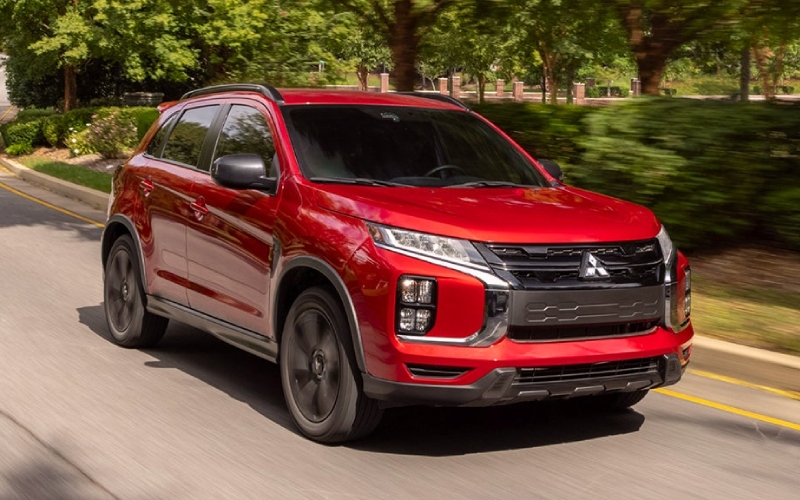
Jeff D’Ambrosio Of Oxford Mitsubishi – Which AWD system fits daily driving around Lancaster, PA better — AWC on the 2026 Outlander Sport or i-Activ AWD on the 2026 CX-30?
Choosing the right AWD system often comes down to consistency you can trust every day — because most of the time you’re not dodging snowbanks, you’re merging, cornering on damp roads, and dealing with uneven surfaces. In that real world, AWC on the 2026 Mitsubishi Outlander Sport and i-Activ AWD on the 2026 Mazda CX-30 take different routes to a similar goal: surefooted traction with minimal driver intervention. This FAQ dives beneath the marketing names to explain how each system behaves, why hardware like the rear suspension matters, and which setup might better suit the mix of city streets, regional highways, and backroads around Lancaster, PA.
How both systems think ahead
The 2026 Outlander Sport uses All-Wheel Control (AWC) with a Drive Mode Selector to proactively share torque between the front and rear axles. It monitors inputs like wheel speed and steering angle to help you launch cleanly on wet pavement or maintain stability through off-camber turns. Mazda’s i-Activ AWD constantly estimates available grip and driver intent, then subtly dials in the rear axle to stabilize the chassis. In both cases, the intent is the same — give you the right amount of traction before you notice a slip — and that means fewer surprises when the surface changes mid-corner or while accelerating across painted lines and metal bridge joints.
Why suspension layout changes the feel
AWD distribution is only half the story. The way the rear wheels follow the road has a huge impact on stability and confidence. The Outlander Sport’s multi-link rear suspension allows the left and right wheels to react more independently over bumps and angled patches. That helps the tires maintain contact and communicate what the road is doing. The CX-30 uses a torsion-beam rear axle tuned for crisp steering response, and it does a fine job in daily driving. But the multi-link advantage becomes more noticeable on broken pavement, angled railroad crossings, and mid-corner bumps — places where the Outlander Sport tends to feel settled and predictable.
Drive modes and daily nuances
Drive modes are like small adjustments to your car’s mindset. In the Outlander Sport, the Drive Mode Selector tailors throttle, transmission mapping, and AWC responses to match conditions. That means calmer, smoother launches in slippery settings and a more direct response when conditions are good. Many CX-30 trims feature Mi-Drive with modes designed for regular and off-pavement use; it’s effective and intuitive. The net result is that both vehicles feel adaptable, but the Outlander Sport’s programming works hand in glove with its ground clearance and suspension to keep things calm when the road surface changes frequently.
Ground clearance, visibility, and the confidence loop
Keeping your confidence high is as much about what you see and hear as how your AWD computer thinks. The Outlander Sport’s 8.5 inches of ground clearance adds space over ruts, slush ridges, and crowned driveways, while the upright seating position and compact length help with sightlines in tight parking lots and alley exits. CX-30’s sleek profile is pleasing on the eyes, and its sightlines are good, too, but drivers who regularly encounter raised curbs and uneven alleys may prefer the extra underbody margin the Outlander Sport provides. Clipping fewer obstacles and reading traffic sooner both lower your stress and make the AWD system’s job easier.
Technology complements those fundamentals. The Outlander Sport includes LED low and high beam headlights and rain-sensing wipers, and offers LED fog lights that can help cut glare in misty conditions. The CX-30 brings its own strengths with available features like a 360º View Monitor, an enlarged central display on upper trims, and Alexa Built-in for voice control. Both cabins integrate Apple CarPlay and Android Auto for navigation and media, which means you get map-based traffic awareness regardless of your system preference.
Ownership and long-term value
Beyond first impressions, long-term ownership confidence matters. Mitsubishi Motors backs the Outlander Sport with America’s Best-Backed Vehicles coverage, featuring a 10-year/100,000-mile Powertrain Limited Warranty and 5 years of roadside assistance. Mazda counters with strong safety credentials for the CX-30 and a track record of building responsive, refined small SUVs. Still, if your plan is to keep your vehicle well past the first lease cycle, extended powertrain coverage brings genuine peace of mind.
For drivers deciding between these two AWD philosophies, the takeaway is straightforward: the Outlander Sport’s AWC pairs with multi-link rear suspension and generous ground clearance to feel composed and predictable over a wider variety of imperfect surfaces. Mazda’s i-Activ AWD shines for polished on-road manners and smart integration with the rest of the chassis. Your best match depends on how often your routes mix neat asphalt with patched city streets, angled intersections, and uneven shoulders around Lancaster, PA.
- AWD philosophy: Both systems predict and respond to changing grip; AWC emphasizes traction with helpful drive modes, while i-Activ AWD fine-tunes stability through continuous monitoring.
- Ride-and-handling hardware: Outlander Sport’s multi-link rear suspension helps the rear wheels stay planted on rougher surfaces; CX-30’s torsion beam focuses on crisp steering feel.
- Everyday practicality: Outlander Sport’s 8.5 inches of ground clearance and upright visibility support mixed-surface routes and tight parking; CX-30 counters with refined interior options and available driver-view tech.
Frequently Asked Questions:
Is AWC always active, or do I have to switch it on?
AWC is always monitoring conditions and distributing torque; you can use the Drive Mode Selector to shape how quickly and assertively it reacts to changing traction.
Does the Mazda CX-30 offer multiple AWD modes?
Many CX-30 trims feature Mi-Drive modes that adjust vehicle responses for everyday and low-grip settings, helping the AWD system support the chassis with predictable behavior.
What’s the difference between AWC and Mitsubishi’s S-AWC?
AWC in the Outlander Sport manages front-to-rear torque distribution and coordinates with vehicle systems for stability. S-AWC, used on other Mitsubishi SUVs, adds enhanced yaw-control strategies for an even broader range of conditions.
When you’re ready to step from research to road feel, a short back-to-back test drive will clarify which system suits your routes and reflexes. With one visit, you can evaluate outward visibility, how the chassis settles over patched pavement, and how each AWD system behaves during gentle stops and starts on angled surfaces. That seat time is often the most persuasive factor in this match-up.
For a friendly, no-pressure comparison drive, connect with Jeff D’Ambrosio Of Oxford Mitsubishi — serving Lancaster, Springfield, and Downingtown — and see how the Outlander Sport’s AWC stacks up to your daily routine.
Request more 2026 Mitsubishi Outlander Sport information
Connect with us


- June 2026
- May 2026
- April 2026
- March 2026
- February 2026
- January 2026
- October 2024
- September 2024
- August 2024
- July 2024
- June 2024
- May 2024
- April 2024
- March 2024
- February 2024
- January 2024
- December 2023
- November 2023
- October 2023
- September 2023
- August 2023
- July 2023
- June 2023
- May 2023
- March 2023
- February 2023
- January 2023