

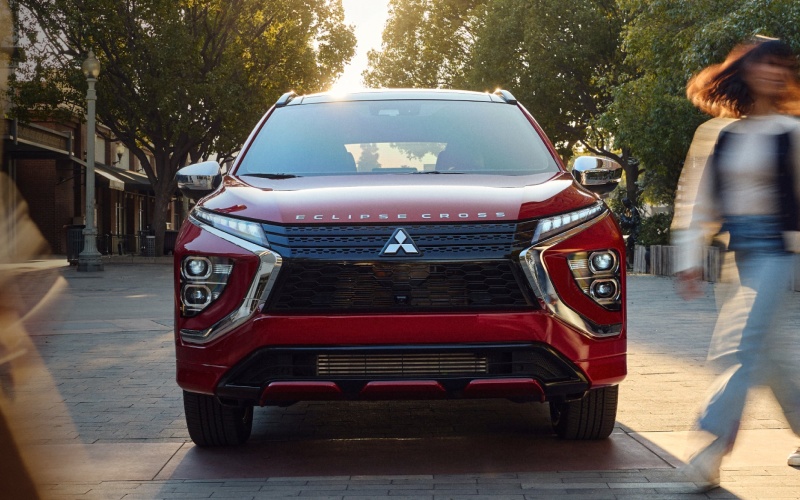
Jeff D’Ambrosio Of Oxford Mitsubishi – Which AWD helps most on wet and uneven roads around Lancaster, PA — the 2026 Mitsubishi Eclipse Cross or the 2026 Jeep Compass?
Shoppers across Central Pennsylvania often ask a simple question with big real-world implications: which compact SUV feels more planted on wet, rutted, or patchy pavement—especially on the roads around Lancaster, PA, where surfaces can shift from fresh asphalt to worn concrete in a few miles? The 2026 Mitsubishi Eclipse Cross and the 2026 Jeep® Compass both bring standard all-wheel traction, but they don’t use it the same way. Understanding how each system behaves on imperfect roads will help you pick the one that inspires confidence every day.
At the core of the Eclipse Cross is Super All-Wheel Control (S-AWC), standard on every trim. Think of S-AWC as a smart coordinator: it integrates traction control, braking, and Active Yaw Control to help the SUV rotate naturally as you enter and exit a turn. On a damp bend with a mid-corner patch, S-AWC works to keep the vehicle settled rather than fighting understeer. Drive modes—Normal, Snow, and Gravel—tailor response to surface conditions. The result in day-to-day driving is a calm, predictable feel, with fewer corrections needed on the wheel and a planted stance when the road gets lumpy.
How the Compass approaches grip
Jeep Compass uses the Jeep Active Drive 4×4 system as standard, coordinated by Selec-Terrain® drive modes. Across trims, you get Auto and Snow modes; on the Trailhawk® with Jeep Active Drive Low, you also get Sand/Mud and Rock. Compass has a real off-road pedigree, and you can feel that in the Trailhawk’s extra crawl capability and all-terrain tires. On slick pavement, the system balances traction well, and on loose surfaces, Selec-Terrain can make a noticeable difference. For drivers splitting time between paved streets and weekend trailheads, those extra off-road modes are a plus.
The key difference is where each SUV is optimized. Compass leans into off-pavement prowess—especially in Trailhawk—while Eclipse Cross dials up precision and stability for paved commutes, wet bridges, and patchy on-ramps. On the rolling routes and variable surfaces that define many suburban and rural commutes here, S-AWC’s subtle corrections and Active Yaw Control are confidence-builders.
Everyday drivability: engine and transmission behavior
The Eclipse Cross pairs a 1.5L turbo four with a CVT tuned for smooth, low-drama acceleration. It’s quiet on a cruise and avoids hunting for gears when traffic ebbs and flows. Available paddle shifters let you hold ratios on grades or set up a pass. The Compass counters with a 2.0L turbo four and an 8-speed automatic. It has stronger output and, in Trailhawk, the extra leverage of Jeep Active Drive Low for slow, controlled progress off-road. Around town, both accelerate smoothly, but the Eclipse Cross’s powertrain tuning favors a hushed, predictable rhythm that’s easy to live with Monday through Friday.
Chassis and suspension character on imperfect roads
Look under the vehicles and you’ll see why their personalities diverge. The Eclipse Cross uses a multi-link rear suspension, helping the back of the vehicle track steadily over broken pavement and mid-corner heaves. Combined with S-AWC’s Active Yaw Control, the Mitsubishi feels composed on damp curves and worn highway seams. Compass uses rear struts; it’s stable and capable, but the Eclipse Cross’s multi-link setup pays dividends in ride polish on bumpy stretches.
Safety and driver assistance that reinforce confidence
Both SUVs come with modern driver-assistance features. Eclipse Cross includes standard Forward Collision Mitigation with Pedestrian Detection and Lane Departure Warning, then adds available Blind Spot Warning with Lane Change Assist and Rear Cross Traffic Alert on SE and above, plus a Multi-View Camera System on SEL. Compass provides standard active safety, with available Active Driving Assist and Drowsy Driver Detection. The difference isn’t just features—Mitsubishi pairs them with Mitsubishi Motors Confidence, including a 10-year/100,000-mile Powertrain Limited Warranty, 5 years of 24-hour Roadside Assistance, and 2 years/30,000 miles of limited maintenance. That long-term support reduces ownership stress long after the new-car smell fades.
Frequently Asked Questions:
Does S-AWC make a difference on regular, paved roads?
Yes. S-AWC’s Active Yaw Control subtly manages torque and braking side to side to help the SUV rotate naturally in corners. On wet or uneven pavement, it contributes to a settled, predictable feel with fewer steering corrections.
Which one is better if I plan occasional light towing?
Compass is rated up to 2,000 pounds when properly equipped, while the Eclipse Cross is rated up to 1,500 pounds. If you need that extra margin, Compass has an advantage; for small utility trailers, Eclipse Cross is well within range.
How do long-term ownership benefits compare?
Mitsubishi supports Eclipse Cross with an industry-leading 10-year/100,000-mile Powertrain Limited Warranty plus 2 years/30,000 miles of limited maintenance. Compass includes a 5-year/60,000-mile powertrain warranty. If you value long-term coverage, Eclipse Cross is a standout.
Who should choose which?
If you prioritize an easygoing commute on wet and worn surfaces, the 2026 Mitsubishi Eclipse Cross delivers the poised, quiet confidence many drivers want most of the time. If your weekends regularly involve ruts, rocks, and remote trailheads, the Compass—particularly Trailhawk—leans into that mission.
Ready to drive them back-to-back? Jeff D’Ambrosio Of Oxford Mitsubishi is serving Lancaster, Springfield, and Downingtown with informed comparisons and trims that fit how you’ll really use your next SUV. Our team will walk you through S-AWC’s advantages on everyday roads, the comfort and tech packages that simplify busy weeks, and how coverage and maintenance can lower long-term stress.
In short: both are capable. For the broadest range of paved-road conditions and the kind of mixed-surface commuting our region sees year-round, Eclipse Cross’s standard S-AWC and multi-link composure give it the edge many shoppers are looking for in a compact SUV.
Request more 2026 Mitsubishi Eclipse Cross information
Connect with us


- August 2026
- July 2026
- June 2026
- May 2026
- April 2026
- March 2026
- February 2026
- January 2026
- October 2024
- September 2024
- August 2024
- July 2024
- June 2024
- May 2024
- April 2024
- March 2024
- February 2024
- January 2024
- December 2023
- November 2023
- October 2023
- September 2023
- August 2023
- July 2023
- June 2023
- May 2023
- March 2023
- February 2023
- January 2023