

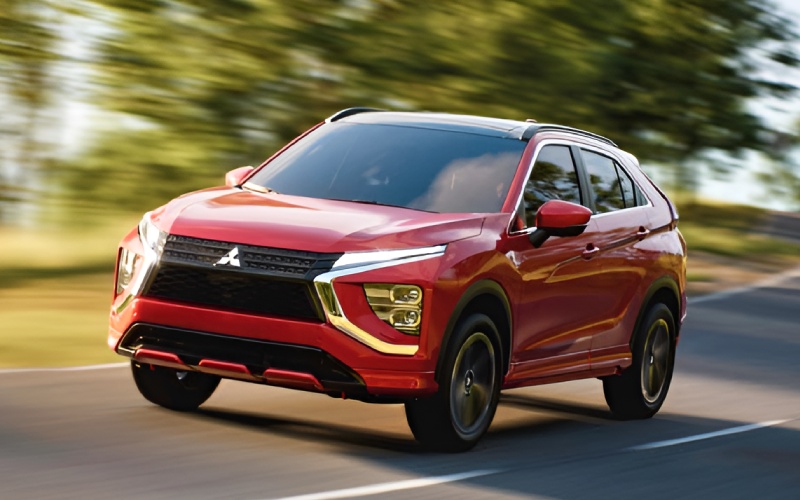
Jeff D’Ambrosio Of Oxford Mitsubishi – Which AWD system suits winter and wet roads around Newark, DE better — S-AWC in the 2026 Eclipse Cross or Symmetrical All-Wheel Drive in the 2026 Crosstrek?
When the forecast calls for sleet one day and sudden downpours the next, traction technology becomes the most important feature you never see. Shoppers comparing the 2026 Eclipse Cross and the 2026 Crosstrek often ask which AWD setup performs better in real-world Newark, DE conditions. Both vehicles bring standard all-wheel drive, but they approach control differently. Mitsubishi’s Super All-Wheel Control (S-AWC) is a coordinated system that blends torque distribution with stability logic and brake-based torque vectoring via Active Yaw Control to help the vehicle hold a steady line. Subaru’s Symmetrical All-Wheel Drive emphasizes balanced weight distribution with X-MODE on select trims for low-traction scenarios, while EyeSight® Driver Assist Technology adds a wide-angle layer of active safety. The question is not simply “which has AWD,” but which applies it most helpfully through the turns, over broken pavement, and across slick intersections.
S-AWC’s strength lies in how it integrates traction and directional control. When surfaces vary under left and right wheels, Active Yaw Control can help the Eclipse Cross maintain the path you set with the steering wheel, complementing the selectable drive modes you choose for snow or loose surfaces. Pair that with the turbocharged 1.5-liter engine’s low-end torque and the available Multi-View Camera System for tight, snow-narrowed streets, and the Mitsubishi feels unflustered in conditions that can unsettle others. Crosstrek counters with the poise of its SUBARU BOXER® engine’s low center of gravity and X-MODE’s tailored algorithms for slippery climbs and descents; Wilderness models add more ground clearance and all-terrain tires for trail-focused traction. Both approaches are capable, but on plowed city streets and mixed urban-suburban routes, the Eclipse Cross’s S-AWC advantage shows up in how naturally it tracks where you point it.
- Core philosophy: S-AWC coordinates traction with yaw control for confident cornering; Subaru’s Symmetrical AWD prioritizes balance and stability with even weight distribution.
- Low-traction tools: Eclipse Cross offers selectable modes within S-AWC; Crosstrek provides X-MODE on specific trims and dual-function settings on Wilderness for off-pavement use.
- Everyday confidence: Eclipse Cross pairs S-AWC with an available Multi-View Camera System and a Handsfree Power Tailgate; Crosstrek focuses on robust visibility and the assurance of EyeSight®.
- Power delivery: Eclipse Cross uses a turbocharged engine for accessible torque; Crosstrek’s SUBARU BOXER® powertrains emphasize smooth, predictable response.
Drivers also ask about longevity and ownership support for winter-driven vehicles. Mitsubishi backs the Eclipse Cross with a 10-year/100,000-mile Powertrain Limited Warranty, 5 years of 24-Hour Roadside Assistance, and 2-year/30,000-mile Limited Maintenance. Subaru’s limited and powertrain warranties are shorter by comparison. If you plan to keep your compact SUV long enough to see multiple winters, those protections can provide tangible, long-term value. Inside the cabin, the Eclipse Cross’s available heated steering wheel and heated seats match Crosstrek’s cold-weather amenities, so comfort is covered on both sides.
For Newark-area commutes that blend freeway merges, signal-to-signal city driving, and slushy side streets, S-AWC’s nuanced control and the Eclipse Cross’s everyday usability make a strong case. Add the available Multi-View Camera System for confident parking when snowbanks shrink your line of sight, and you have a compact SUV that feels calm and collected when conditions are anything but.
Frequently Asked Questions:
Does S-AWC help on dry roads or only in snow?
S-AWC enhances control year-round by coordinating traction and stability inputs, so steering feels consistent whether the pavement is dry, wet, or patchy.
Do I need special driving modes for light snow?
In light snow, Normal mode in S-AWC is often sufficient; Snow or Gravel modes further optimize traction logic when conditions worsen.
Is ground clearance the deciding factor for winter?
Ground clearance helps in deeper snow, but in day-to-day winter driving, stable torque distribution and yaw control—where S-AWC excels—often make the bigger difference.
If you are exploring both models, our product specialists can walk you through how S-AWC behaves on a test route and explain which features align with your routine. Jeff D’Ambrosio Of Oxford Mitsubishi is serving Newark, DE, Lancaster, PA, and Springfield, PA, with side-by-side guidance so you drive away with confidence the first time the weather turns.
Request more 2026 Mitsubishi Eclipse Cross information
Connect with us


- August 2026
- July 2026
- June 2026
- May 2026
- April 2026
- March 2026
- February 2026
- January 2026
- October 2024
- September 2024
- August 2024
- July 2024
- June 2024
- May 2024
- April 2024
- March 2024
- February 2024
- January 2024
- December 2023
- November 2023
- October 2023
- September 2023
- August 2023
- July 2023
- June 2023
- May 2023
- March 2023
- February 2023
- January 2023