

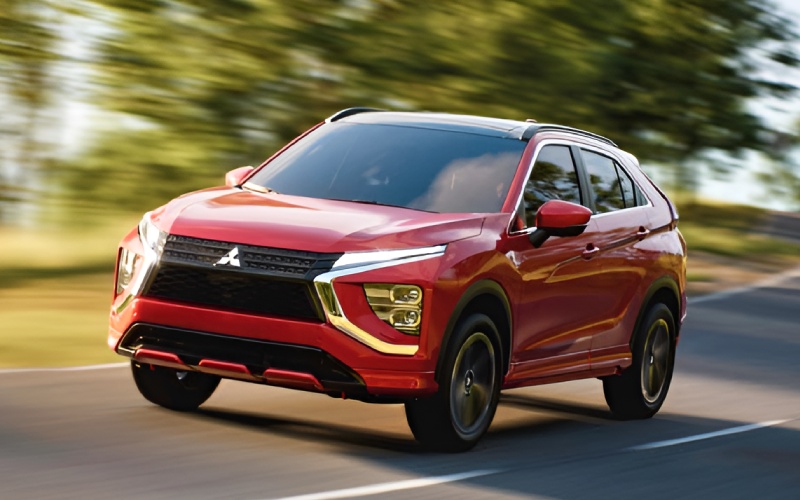
Jeff D’Ambrosio Of Oxford Mitsubishi – Is S-AWC on the 2026 Eclipse Cross or HTRAC AWD on the 2026 Kona better for Lancaster, PA, weather?
Drivers comparing these two compact SUVs often ask a focused question: which all-wheel system feels more reassuring in everyday wet, slushy, or lightly snowy conditions around Lancaster, PA? Both the 2026 Mitsubishi Eclipse Cross and the 2026 Hyundai Kona bring advanced traction technologies, yet they do so with different philosophies. Eclipse Cross makes its case with S-AWC standard across every trim, so you never have to upgrade to access its integrated torque vectoring and traction logic. Kona’s HTRAC AWD is available and effective, pairing well with the 1.6L turbo and 8-speed automatic for confident launches and well-timed shifts. The distinction many shoppers notice in back-to-back drives is how S-AWC ties the SUV’s movements together—throttle, braking, and torque distribution working cohesively to help the SUV remain settled when surfaces get slick. That cohesive, built-in assurance matters when commutes involve early mornings, changing forecasts, and packed intersections.
To help you decide, we break down how each system supports everyday control, then invite you to drive both on a route with tight turns, uneven pavement, and quick merges. On the Eclipse Cross, S-AWC’s programming aims to minimize scrabble on takeoff while reducing the small corrections that add fatigue over time. Kona’s HTRAC AWD responds quickly and adds drive modes that tailor its behavior, which is a plus for drivers who like to fine-tune. Cabin impressions differ as well: Eclipse Cross emphasizes quiet refinement and available leather-appointed seating on upper trims, while Kona leans tech-forward with dual 12.3-inch displays and available Bose® Premium Audio on Limited. The question, ultimately, is which one feels calmer and more predictable under the conditions you face most frequently.
- Traction philosophy: Eclipse Cross uses standard S-AWC across every trim; Kona offers HTRAC AWD as an available system
- System integration: S-AWC integrates yaw control and torque distribution for a planted feel; HTRAC AWD emphasizes selectable drive modes and rapid response
- Daily confidence: Eclipse Cross prioritizes smooth, cohesive reactions on wet and slushy roads; Kona counters with crisp step-gear responses and strong feature content
- Feature highlights: Eclipse Cross offers available Multi-View Camera System and hands-free power tailgate; Kona Limited adds Surround View Monitor and Hyundai Digital Key 2 Touch
- Seat comfort: Eclipse Cross provides available leather-appointed seating; Kona offers durable H-Tex® surfaces on upper trims
Our recommendation for Lancaster weather, including shoulder seasons with damp mornings and quick temperature swings, is to prioritize the SUV that feels calmer during quick inputs and sudden traction changes. That’s where standard S-AWC in the Eclipse Cross tends to resonate with commuters who want consistent confidence without stepping up multiple packages. Kona remains a strong contender for drivers who prioritize expansive displays and a lively step-gear character, especially when paired with the 1.6L turbo. Either way, a thorough test drive is essential.
Frequently Asked Questions:
Do I need winter tires if I choose an SUV with AWD?
AWD improves acceleration and stability, but winter-rated tires still make the biggest difference below 45 degrees and on snow-packed roads. Pairing S-AWC or HTRAC AWD with proper winter tires yields the best cold-weather confidence.
Can I feel a difference between S-AWC and HTRAC AWD in normal rain?
On familiar routes, many drivers describe S-AWC as requiring fewer steering corrections during standing-water patches and painted lines, while HTRAC AWD feels quick and surefooted. The best way to evaluate the nuance is a same-day, same-route drive.
Which is better for uneven, patched pavement?
Both SUVs handle broken surfaces well. Eclipse Cross emphasizes a calmer ride character, while Kona’s chassis feels nimble. If ride comfort on rough local roads is a priority, drive both over the same sections and note which leaves you more relaxed.
If you are comparing traction, comfort, and daily usability, schedule a back-to-back drive on your typical roads. Our team is serving Lancaster, Springfield, and Downingtown with test routes designed to highlight real-world traction and visibility. When you are ready, we will prepare a focused comparison so you can feel the difference in steering effort, throttle response, and cabin quiet. Jeff D’Ambrosio Of Oxford Mitsubishi will make sure the conditions and route reflect your routine so your decision feels as informed as possible.
Request more 2026 Mitsubishi Eclipse Cross information
Connect with us


- July 2026
- June 2026
- May 2026
- April 2026
- March 2026
- February 2026
- January 2026
- October 2024
- September 2024
- August 2024
- July 2024
- June 2024
- May 2024
- April 2024
- March 2024
- February 2024
- January 2024
- December 2023
- November 2023
- October 2023
- September 2023
- August 2023
- July 2023
- June 2023
- May 2023
- March 2023
- February 2023
- January 2023